Few household problems are as frustrating as a drain that clears up for a week or two, only to slow down and back up again. When this cycle repeats itself month after month, it usually means the real issue was never actually solved. Understanding the Root Causes of Recurring Drain Clogs is the only way to move past temporary fixes and toward a permanent solution that protects your home, your time, and your budget.
This guide breaks down why clogs keep returning, which household habits and pipe conditions contribute most to the problem, and how a professional plumber in Mesa diagnoses and resolves the issue for good.
What Are the Root Causes of Recurring Drain Clogs
The Root Causes of Recurring Drain Clogs almost always trace back to something deeper than the surface level blockage a homeowner can see or reach with a plunger. A clog that clears temporarily but returns again and again is usually a sign that grease, mineral scale, tree roots, or a structural pipe defect is still present further down the line, continuing to trap debris even after the visible symptom disappears.
Many people assume that once water starts flowing again, the problem is solved. In reality, most quick fixes like store bought drain cleaners or a basic plunger only clear the newest layer of buildup while leaving the underlying obstruction in place. Within days or weeks, new debris attaches to that same spot, and the cycle starts over.
Grease and Fat Buildup Inside the Pipes
One of the most common contributors to recurring kitchen drain blockages is the slow accumulation of grease, oil, and fat. Even small amounts poured down the sink after cooking do not simply wash away. As they cool inside the pipe, they solidify along the interior walls, narrowing the passage available for water and waste to pass through.
Over time, this greasy coating acts like glue, catching food particles, coffee grounds, and other debris. Each new layer makes the passage narrower until water can barely get through, and even a thorough plunging only removes the surface layer rather than the hardened buildup further down the line.
Hair and Soap Residue in Bathroom Drains
In bathroom sinks, tubs, and showers, hair combined with soap scum is one of the leading Root Causes of Recurring Drain Clogs. Hair strands catch on minor imperfections inside the pipe and then trap soap residue, skin cells, and shampoo buildup around themselves, forming a dense mass that continues to grow with every shower or wash.
Because hair does not dissolve on its own, a partial removal during a quick cleaning often leaves enough material behind for the clog to rebuild itself within a short period. This is why bathroom drains are notorious for backing up again just weeks after seeming to clear completely.
Tree Root Intrusion Into Sewer Lines
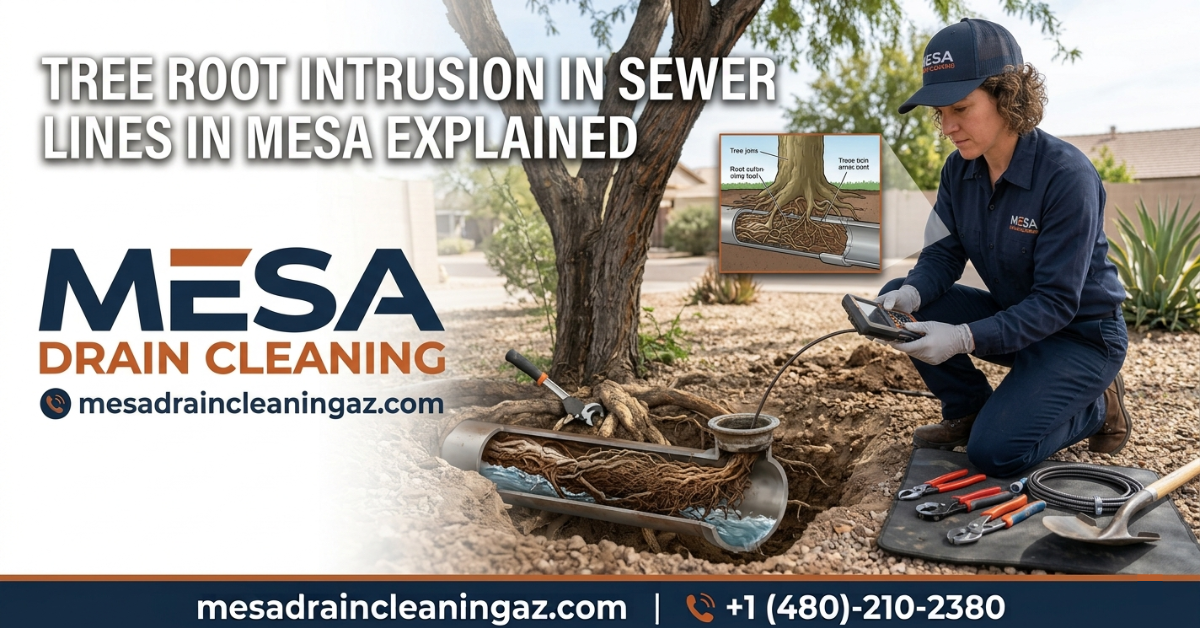
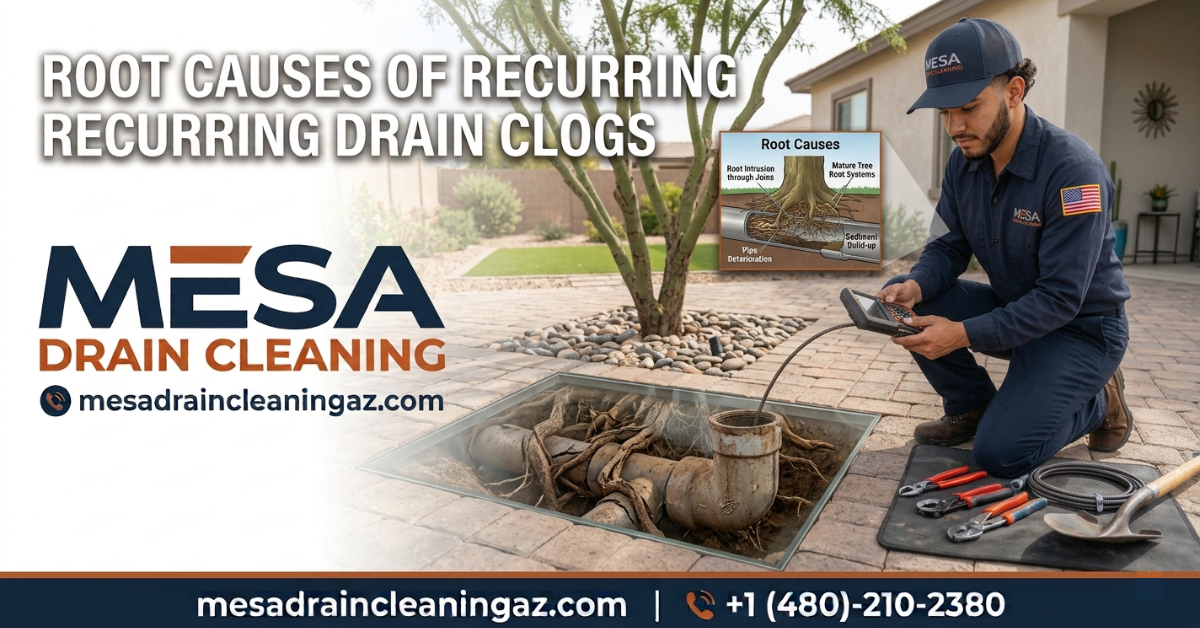
Beyond the fixtures inside the home, one of the more serious Root Causes of Recurring Drain Clogs involves the main sewer line itself. Tree roots are naturally drawn to the moisture inside sewer pipes, and even a hairline crack or a loose joint can allow root tips to enter. Once inside, roots expand steadily, catching paper, wipes, and solid waste as they pass, creating a blockage that mechanical snaking alone may only partially clear.
Homeowners in older neighborhoods with mature trees are especially likely to experience this issue, since established root systems have had years to locate and exploit any weakness in the surrounding pipe network.
Aging Pipes and Mineral Scale Buildup
Older plumbing systems, particularly those made from galvanized steel or clay, are another frequent source of these repeating blockages. As these materials age, mineral deposits from hard water gradually coat the interior surface, a process known as scale buildup. This scale roughens the pipe wall, giving debris more surface area to cling to and making it far easier for new material to accumulate quickly after a cleaning.
In severe cases, corrosion inside galvanized pipes can actually cause flakes of rust and metal to break loose, adding to the blockage from within the pipe material itself rather than from anything introduced through daily use.
Improper Pipe Slope and Layout
Not every clog originates from what goes down the drain. Sometimes the Root Causes of Recurring Drain Clogs are structural, tracing back to how the plumbing was originally installed. A pipe that does not have adequate slope will not allow gravity to move wastewater efficiently, causing solids to settle and accumulate rather than flow through to the main line.
Similarly, sections of pipe with unnecessary bends, or areas where pipe diameter changes abruptly, create natural collection points where debris gathers. These design and installation issues cannot be solved with cleaning alone, since the underlying flow problem remains no matter how often the line is cleared.
Poor Ventilation and Plumbing Vent Issues
Homeowners rarely think about plumbing vents when troubleshooting a slow drain, yet a blocked or poorly designed vent stack is another lesser known factor behind repeat blockages. Vent pipes allow air to enter the plumbing system, equalizing pressure so that wastewater can flow freely toward the main line. When a vent becomes blocked by leaves, debris, or even a bird nest, negative pressure builds inside the pipe, causing water to drain more slowly and allowing solids to settle rather than move through the system efficiently.
Over time, this slower flow gives grease, soap residue, and other debris more opportunity to cling to the pipe walls, indirectly accelerating the very buildup that leads to a recurring clog. Because the vent itself is located on the roof rather than inside the home, this cause is frequently overlooked until a professional inspection reveals it.
Flushing Non Flushable Items
Household habits play a significant role among the Root Causes of Recurring Drain Clogs, particularly in bathrooms. Items labeled as flushable wipes, along with cotton swabs, dental floss, feminine hygiene products, and paper towels, do not break down the way toilet paper does. These materials travel only a short distance before snagging on a rough patch or partial obstruction, where they accumulate layer after layer with each subsequent flush.
Because these items do not dissolve, a single cleaning often only removes what is visible near the access point, leaving material further down the line to continue trapping debris and rebuilding the clog over time.
Foreign Objects and Small Debris
Small objects that fall into drains, from children’s toys to jewelry, bottle caps, or produce stickers, can lodge themselves in a bend or joint and become a permanent catch point. Once an object is stuck in place, it functions much like a tree root or a section of scale, continuously trapping new debris and keeping the clog coming back even after routine cleanings appear successful.
How a Plumber in Mesa Diagnoses the Real Problem
Because so many of the Root Causes of Recurring Drain Clogs are hidden well below the surface, a professional inspection is often the only reliable way to identify the true source of the issue. A licensed plumber in Mesa typically begins with a video camera inspection, feeding a flexible camera through the cleanout to examine the entire length of the pipe in real time. This allows the technician to see exactly where roots, scale, grease, or structural defects are located, rather than guessing based on symptoms alone.
Once the exact cause has been identified, the plumber can recommend a targeted solution instead of repeating the same temporary fix that led to the recurring problem in the first place.
Long Term Solutions for Recurring Clogs
Solving the Root Causes of Recurring Drain Clogs permanently usually requires a combination of professional cleaning and, in some cases, repair or replacement of damaged sections of pipe.
Hydro jetting uses a high pressure stream of water to scour the entire interior surface of the pipe, removing grease, scale, and root intrusion far more thoroughly than a standard mechanical snake. Because it cleans the full diameter of the pipe rather than just cutting a narrow path through the blockage, hydro jetting tends to delay the return of buildup significantly longer than other methods.
For pipes damaged by corrosion, cracks, or persistent root intrusion, trenchless repair methods such as pipe relining or pipe bursting can restore a smooth, structurally sound interior without extensive excavation. These methods address the physical defect that was allowing debris to collect in the first place, rather than simply clearing whatever has built up at the time of service.
Routine maintenance also plays an important role. Scheduling a camera inspection every year or two allows a plumber in Arizona to catch new root growth, early scale formation, or shifting pipe joints before they progress into a full blockage, keeping the household ahead of the problem rather than reacting to it.
Everyday Habits That Prevent Recurring Clogs
While professional repair addresses existing damage, everyday habits can reduce the odds that new blockages develop in the first place. Pouring cooking grease into a separate container rather than down the sink prevents the fat buildup that leads to many kitchen drain clogs. Installing simple mesh strainers over shower and tub drains catches hair before it enters the pipe, addressing one of the most common triggers behind repeat bathroom blockages.
Avoiding the temptation to flush wipes, paper towels, or hygiene products, even those labeled flushable, removes a major source of bathroom line obstructions. Running hot water through kitchen and bathroom drains regularly also helps prevent grease and soap residue from hardening along the pipe walls between cleanings.
Signs It Is Time to Call a Professional
Not every slow drain requires a service call, but certain warning signs suggest that a deeper issue is developing and that continuing to rely on home remedies will only delay a proper fix. Multiple drains backing up at the same time, rather than just one isolated fixture, typically points to a blockage in the main line rather than a simple local clog. Gurgling sounds from toilets or nearby drains when another fixture is used often indicates trapped air behind an obstruction further down the system. A clog that returns within days of clearing it, despite repeated cleaning, is one of the clearest signals that the underlying cause has not actually been addressed.
Foul odors coming from drains, unusually slow drainage across the entire home, or visible water pooling near outdoor cleanouts are additional indicators that it may be time to bring in a plumber in Arizona for a proper diagnosis rather than continuing to treat the symptoms on a temporary basis.
Frequently Asked Questions
Why does my drain clog again so soon after cleaning it myself?
Most do it yourself methods only clear the newest layer of debris near the surface. If the underlying cause, such as tree roots, scale buildup, or a structural pipe defect, is still present, new material will accumulate again within days or weeks.
Can a plumber tell me exactly why my drain keeps clogging?
Yes. A video camera inspection performed by a licensed plumber in Mesa allows the technician to see the interior of the pipe directly, identifying the specific cause rather than relying on guesswork based on symptoms alone.
Is hydro jetting better than a standard drain snake?
For addressing the Root Causes of Recurring Drain Clogs, hydro jetting is generally more effective because it cleans the entire interior surface of the pipe rather than cutting a narrow channel through the blockage, which helps delay the return of buildup.
Final Thoughts
Recurring clogs are rarely random. In nearly every case, there is an identifiable explanation behind the pattern, whether it involves grease buildup, hair and soap residue, tree root intrusion, aging pipe materials, or a structural flaw in the original installation. Understanding the Root Causes of Recurring Drain Clogs allows homeowners to move beyond short term fixes and invest in solutions that actually last. Working with an experienced plumber in Arizona for a thorough inspection and a targeted repair plan is the most reliable way to finally break the cycle and keep drains flowing smoothly for years to come.