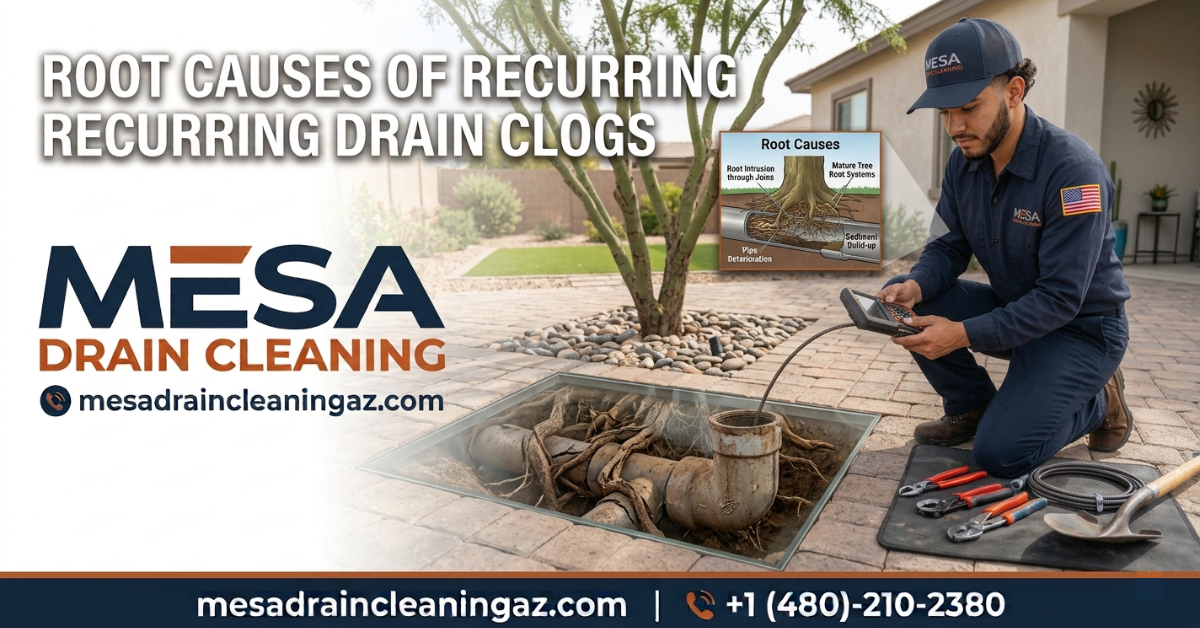
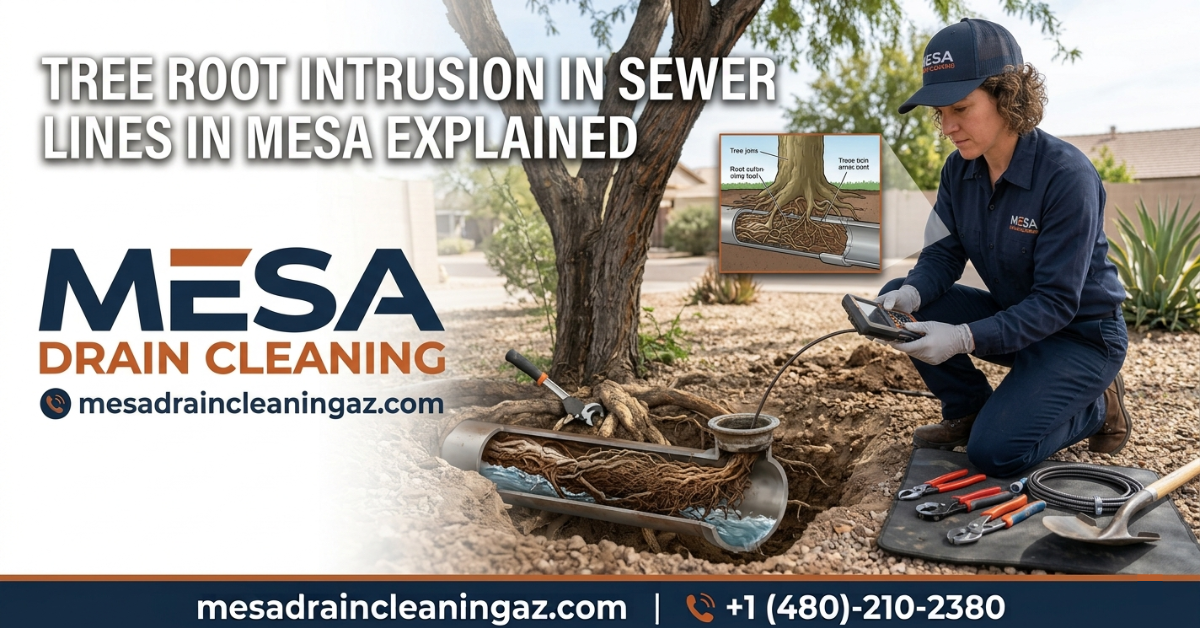
Homeowners across the Valley often discover, only after a slow drain turns into a backed up toilet, that something far more stubborn than hair or grease is choking their pipes. Tree Root Intrusion in Sewer Lines in Mesa is one of the most common and most misunderstood plumbing problems in the area, and understanding how it happens is the first step toward protecting your property, your yard, and your budget.
Mesa’s warm climate, mature landscaping, and aging underground infrastructure combine to create ideal conditions for roots to find their way into pipes that were never designed to host them. This guide walks through what causes the issue, how to spot it early, what a professional plumber in Mesa will do to fix it, and how you can keep it from happening again.
What Is Tree Root Intrusion in Sewer Lines in Mesa
Tree Root Intrusion in Sewer Lines in Mesa happens when the roots of nearby trees, shrubs, or even large ornamental plants seek out the moisture, nutrients, and oxygen found inside underground sewer pipes. Roots are naturally drawn toward any source of water, and a sewer line carrying wastewater is essentially a steady, reliable water source buried just a few feet below the surface.
Even the smallest crack, loose joint, or hairline fracture in a pipe releases enough moisture into the surrounding soil to attract root growth. Once a root tip locates that moisture, it works its way through the opening. Over months and years, the root thickens inside the pipe, and what began as a hair thin filament can eventually fill an entire pipe section, trapping waste, paper, and debris until the line is fully blocked.
Why Mesa Homes Are Prone to Tree Root Intrusion in Sewer Lines
Several local factors make this type of root related pipe damage more common in the Mesa area than many residents expect.
First, much of the residential plumbing in older Mesa neighborhoods still uses clay or cast iron piping. These materials are durable in many respects, but their joints are more prone to gaps than modern PVC systems, giving roots an easy entry point.
Second, Mesa’s dry desert climate actually encourages the problem rather than preventing it. During long stretches without rain, tree and shrub roots aggressively search for any underground moisture, and a leaking sewer line becomes one of the most attractive targets available.
Third, mature shade trees such as mesquite, ash, and eucalyptus are popular in Mesa yards precisely because they tolerate heat well, but their root systems are extensive and can travel far beyond the tree canopy in pursuit of water.
Common Tree Species Behind the Problem
Certain trees are repeat offenders when it comes to Tree Root Intrusion in Sewer Lines in Mesa. Eucalyptus, ficus, mesquite, and Chinese elm all have aggressive, fast spreading root systems. Even citrus trees, a favorite in many Mesa backyards, can send roots surprisingly far underground when water is scarce elsewhere in the soil.
Warning Signs of Tree Root Intrusion in Sewer Lines in Mesa
Catching Tree Root Intrusion in Sewer Lines in Mesa early can save homeowners thousands of dollars in emergency repairs. Watch for these indicators.
Slow draining sinks, tubs, or showers throughout the house, rather than just one fixture, often point to a main line obstruction rather than a simple local clog.
Gurgling sounds coming from toilets or drains when other fixtures are used can indicate air trapped behind a root mass in the sewer line.
Recurring backups, especially ones that seem to clear temporarily after a plunger or store bought drain cleaner, are a classic sign that roots are regrowing inside the pipe.
Unusually lush or green patches of lawn above the sewer line, even during dry months, suggest that wastewater is leaking from a cracked pipe and feeding nearby vegetation.
Foul odors near the yard or foundation, along with visible depressions or soft spots in the soil, can also signal a compromised sewer line beneath the surface.
Seasonal Patterns Behind Root Growth in Mesa
Root activity is not constant throughout the year, and understanding the seasonal rhythm of tree growth in the Sonoran Desert helps explain why some homeowners notice sudden backups after months of trouble free plumbing. During the hottest and driest stretches of late spring and summer, trees and shrubs across Mesa push their root systems outward and downward in search of any reliable moisture source. A sewer line that has developed even a small leak becomes a magnet during this period, since it offers a steady supply of water at a time when surface irrigation and rainfall are scarce.
Once the monsoon season arrives, soil conditions shift again. Sudden heavy rain can cause soil to expand and contract rapidly, which sometimes stresses already weakened pipe joints and creates fresh openings for roots to exploit once the ground dries out again. Many local plumbers report a noticeable rise in service calls related to root related blockages in the weeks following the first significant monsoon storms, as shifting soil combines with newly available surface moisture to accelerate root activity underground.
Winter tends to bring a temporary slowdown in root growth, since cooler temperatures reduce a tree’s overall metabolic activity. However, existing root masses inside a pipe do not disappear during this quieter period. They simply pause their expansion, which means a line that was partially blocked in summer can still cause problems months later even without new growth, particularly if debris continues to accumulate around the existing root structure.
How a Plumber in Mesa Diagnoses Root Intrusion
When a homeowner suspects roots have invaded the sewer system, the most reliable next step is calling a licensed plumber in Mesa for a professional inspection rather than guessing based on symptoms alone.
Most technicians begin with a video camera inspection. A flexible camera is fed through the cleanout access point and travels the length of the pipe, giving the plumber a real time view of any cracks, offset joints, or root masses inside the line. This method pinpoints the exact location and severity of the intrusion without any guesswork or unnecessary digging.
Some plumbers also use locating equipment paired with the camera to mark the precise depth and position of the problem area on the surface, which becomes useful if excavation is later required.
Repair and Removal Methods
Once Tree Root Intrusion in Sewer Lines in Mesa has been confirmed, there are several proven methods to clear the blockage and restore proper flow.
Hydro Jetting
Hydro jetting uses a high pressure stream of water to cut through roots, grease, and mineral buildup inside the pipe. It is highly effective at clearing the current obstruction and tends to leave the interior walls of the pipe cleaner than mechanical methods alone, which can slow future regrowth.
Mechanical Auger
A mechanical auger, sometimes called a drain snake, uses a rotating cutting head to chew through root masses and pull debris back out of the line. This method is often used as a first response for smaller intrusions or as a follow up to hydro jetting for stubborn sections.
Pipe Relining and Pipe Bursting
When Tree Root Intrusion in Sewer Lines in Mesa has caused significant structural damage, cleaning alone will not solve the underlying issue, since roots will simply return through the same cracks. Pipe relining inserts a resin coated liner inside the existing pipe, creating a smooth new interior surface without the need for extensive excavation. Pipe bursting, on the other hand, replaces the damaged pipe entirely by breaking apart the old line while simultaneously pulling a new pipe into place. Both trenchless methods have become popular in Mesa because they minimize disruption to landscaping and driveways compared to traditional dig and replace approaches.
Preventing Tree Root Intrusion in Sewer Lines in Mesa
Prevention is almost always less expensive than repair, and there are practical steps every Mesa homeowner can take to reduce the risk of future problems.
Scheduling routine camera inspections every year or two allows a plumber to catch small cracks before roots have a chance to grow through them.
Planting new trees well away from known sewer line routes, and choosing species with less aggressive root systems, reduces the odds of future intrusion.
Installing root barriers, which are physical or chemical barriers placed in the soil between a tree and the pipe, can redirect root growth away from vulnerable areas.
Applying foaming root treatments periodically helps kill root growth inside the pipe without harming the tree itself, offering a maintenance option for homes with mature landscaping already in place.
Replacing older clay or cast iron sections with modern PVC piping during any planned renovation removes the joint gaps that roots exploit in the first place.
Cost Considerations for Mesa Homeowners
The cost of addressing Tree Root Intrusion in Sewer Lines in Mesa varies depending on the severity of the damage and the repair method chosen. A simple auger or hydro jetting service to clear an active blockage is typically the most affordable option. Camera inspections add a modest cost but provide valuable information that can prevent unnecessary excavation. Trenchless solutions like relining or bursting carry a higher upfront investment but often cost less overall than traditional trenching, since they require less labor, less landscaping restoration, and less time on site. Getting a written estimate from a licensed plumber in Arizona before work begins helps homeowners compare options and avoid unexpected charges.
Choosing the Right Plumber in Arizona
Not every plumbing company has the specialized equipment needed to properly diagnose and treat root related sewer problems. When searching for a plumber in Arizona to handle this type of repair, look for a company that offers video camera inspections, hydro jetting services, and trenchless repair options in house rather than subcontracting the work out. Ask whether the technician is licensed and insured, request references from recent root intrusion jobs, and confirm that any warranty covers both labor and materials. A plumber in Mesa with direct experience in the local soil conditions and common tree species will generally be better equipped to recommend a lasting solution rather than a temporary fix.
DIY Fixes Versus Calling a Professional
Many Mesa homeowners search for a do it yourself solution before reaching out to a plumber, and while some steps are safe to try at home, others can make the underlying problem worse. Over the counter foaming root killers, applied through a toilet or cleanout, can help slow root growth between professional visits and are generally safe for occasional use. A plunger or a small hand auger may temporarily clear a minor clog near a fixture, offering short term relief.
However, chemical drain cleaners marketed for grease and hair clogs are far less effective against root masses and can sometimes damage older clay or cast iron piping if used repeatedly. Renting a large mechanical auger without proper training also carries a real risk of puncturing a already weakened pipe, turning a manageable repair into a much larger excavation project. For anything beyond a very minor, occasional slowdown, scheduling a camera inspection with a professional plumber in Mesa is the safer and ultimately more cost effective path, since it identifies the true extent of the damage before any cutting, jetting, or digging begins.
Frequently Asked Questions
How quickly can root related sewer damage get worse in Mesa?
Root growth can accelerate significantly during Mesa’s warmer months when trees are actively searching for water, so a minor intrusion can progress to a full blockage within a single growing season if left untreated.
Can I remove the tree instead of repairing the pipe?
Removing the tree may stop new root growth, but existing roots inside the pipe will still need to be cleared, and the pipe itself will likely still need repair to prevent regrowth from nearby vegetation.
Is trenchless repair available for every home?
Most residential sewer lines in Mesa are good candidates for trenchless repair, though a plumber will need to confirm pipe material, diameter, and the extent of existing damage during inspection.
Final Thoughts
Tree Root Intrusion in Sewer Lines in Mesa is a common but manageable problem once homeowners understand why it happens and how to respond. Recognizing early warning signs, scheduling regular inspections, and working with an experienced plumber in Mesa or a trusted plumber in Arizona can prevent a minor root intrusion from turning into a costly emergency. With the right combination of prevention and timely repair, Mesa homeowners can protect both their landscaping and their plumbing system for years to come.